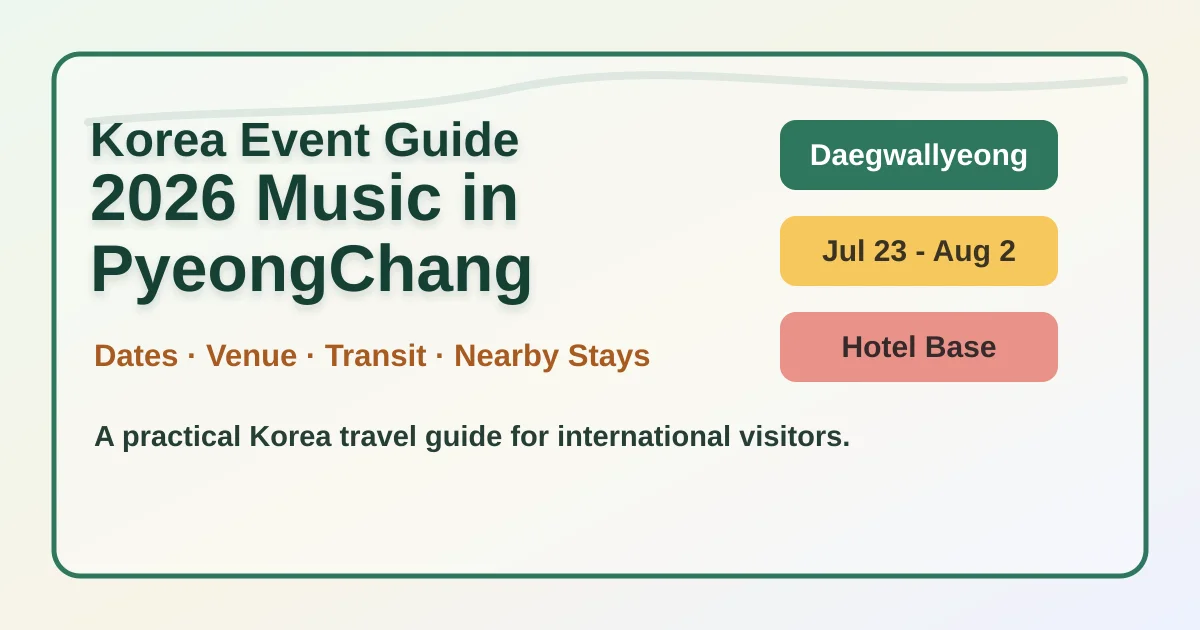
Music in PyeongChang is one of the easiest summer culture trips to build into a Korea itinerary if you plan the logistics early. The 2026 festival runs from July 23 to August 2 in Pyeongchang, with key venues around Alpensia Concert Hall and the Daegwallyeong outdoor performance area, so your hotel choice should match the specific concert times and locations you book.
Quick Festival Snapshot
| Item | Details |
|---|---|
| Event | 2026 Music in PyeongChang |
| Dates | July 23, 2026 to August 2, 2026 |
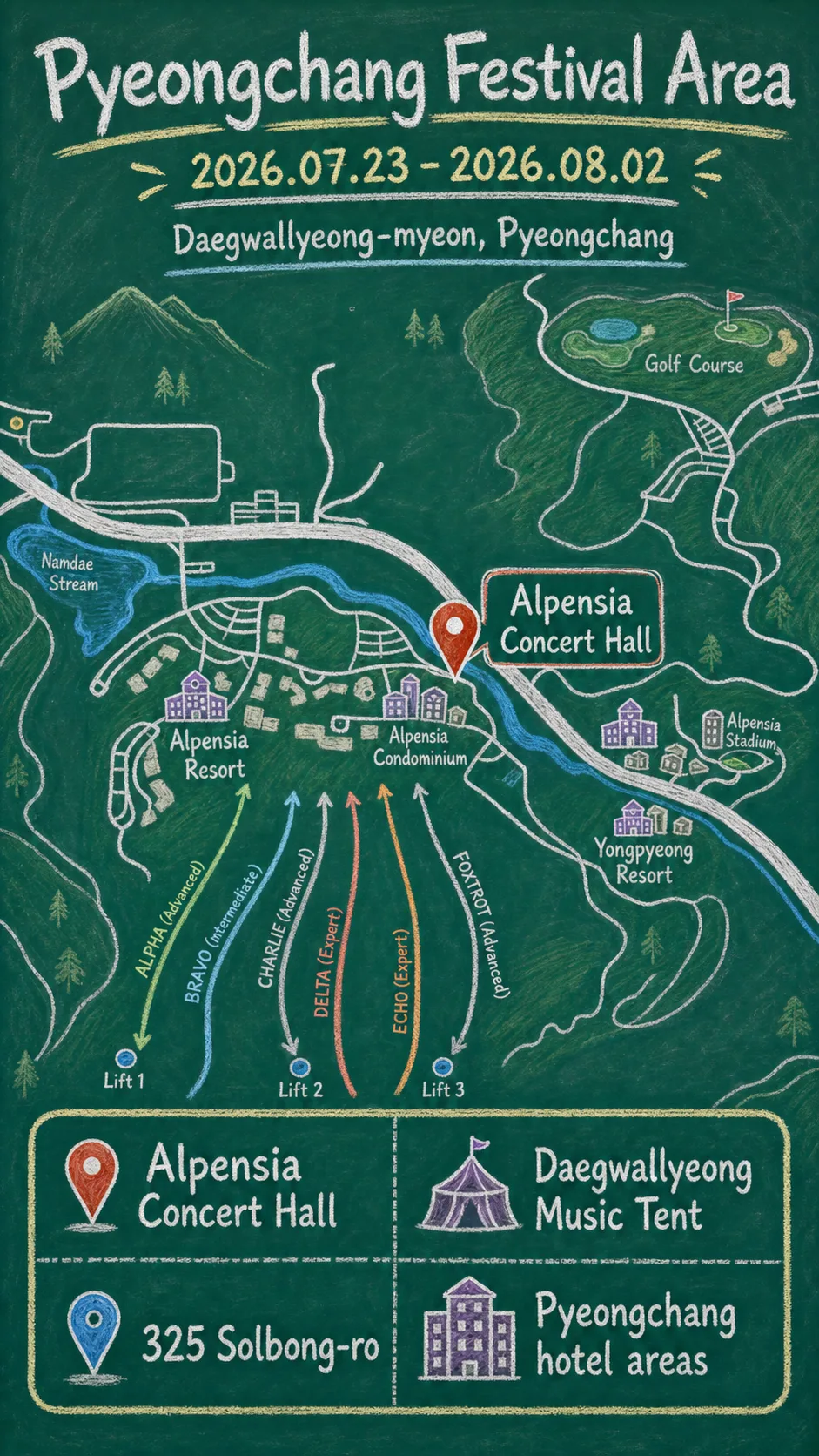
| Main venues | Alpensia Concert Hall, Daegwallyeong outdoor performance venue Music Tent, and other locations in Gangwon State |
| Address | 325 Solbong-ro, Daegwallyeong-myeon, Pyeongchang-gun, Gangwon State, South Korea |
| Theme | Legacy and Innovation |
| Best hotel search area | Pyeongchang, Daegwallyeong, and the Alpensia area |
| Before booking | Check the exact venue, start time, and late-night return route for your chosen performance |
Where It Takes Place
The festival is centered in Daegwallyeong-myeon, a highland area of Pyeongchang in Gangwon State. The source address points to 325 Solbong-ro, close to the Alpensia resort area, but not every program may use the same venue. Treat the ticket page or official program listing as the final reference for your exact performance location.
What to Expect at the Festival
The 2026 edition is presented under the theme “Legacy and Innovation.” The program is described as connecting long-established classical works with new musicians and new pieces, so it may appeal both to serious classical music listeners and travelers looking for a memorable evening performance in the Korean highlands.
In addition to concerts, the festival information mentions educational and exchange-focused programs such as chamber music mentorship, masterclasses, and lectures. Because schedules and admission conditions can vary by program, check the official listing before building your day around a specific event.

Before You Go
- Confirm the exact performance venue, start time, and ticket conditions before travel.
- Bring a light jacket or layer, as evenings in Daegwallyeong can feel cooler than Seoul or coastal cities in summer.
- For outdoor performances, check the weather forecast and allow extra time for walking, queues, and venue entry.
- If your concert ends late, plan your return to the hotel in advance, especially if you are not driving.
- International travelers should keep the venue name and address saved in Korean as well as English for taxis or map apps.
Once you know whether you are attending a daytime program, an evening concert, or both, it becomes much easier to compare accommodation. The most useful filters are distance from the venue area, parking, check-in hours, and how simple it will be to get back after the performance.
Compare Pyeongchang Hotel Options
Getting Around Pyeongchang
Pyeongchang is spread out, and travel times can feel longer than the distance suggests. If you are driving, arrive with a buffer rather than aiming for the final minutes before the performance. Parking and venue access details should be checked through the latest official notice for the specific concert you are attending.
If you are relying on public transportation, check the last available bus, train connection, or taxi option before booking a late performance. For many visitors, staying near Daegwallyeong or the Alpensia area can reduce the stress of returning after an evening concert.
Choosing a Hotel Base
A hotel near the main venue area may be the simplest choice for a short festival-focused trip. It can be especially helpful if you plan to attend an evening concert, want to avoid a long transfer after the performance, or are traveling with family members who may need more rest time.
For a broader Gangwon trip, you may prefer to compare stays in different parts of Pyeongchang depending on the next day’s route. Before booking, look at the venue-to-hotel journey, parking or taxi access, check-in deadline, breakfast timing, and whether your next stop is still in Daegwallyeong or farther toward another part of the county.
Easy Add-Ons Before or After a Concert
If your performance is in the evening, the Daegwallyeong area can work well for a slower daytime plan: lunch, a short walk, a scenic stop, then the concert. Local attractions and activity hours can change by season, so keep the daytime schedule light and confirm opening times before setting out.

For a one-night trip, avoid packing too many distant stops into the same day as your concert. A compact route around your hotel and venue will usually feel better than crossing multiple parts of Gangwon before sitting down for a performance.
Find a Stay for Your Festival Route
Final Planning Notes
The key to a smooth Music in PyeongChang trip is matching three things: your chosen performance, your transport plan, and your hotel base. Once those are aligned, the festival can fit naturally into a summer Korea itinerary without making the evening return or next morning departure feel rushed.
Frequently Asked Questions
When is the 2026 Music in PyeongChang festival?
It is scheduled for July 23 to August 2, 2026. Individual performance times may vary, so check the official schedule before booking tickets or hotels.
Where are the main festival venues?
The main venues named in the source information are Alpensia Concert Hall and the Daegwallyeong outdoor performance venue, also referred to as the Music Tent. Some programs may take place elsewhere in Gangwon State.
Is Pyeongchang an easy day trip from Seoul for an evening concert?
It may be possible depending on the performance time and transport plan, but late returns can be inconvenient. For evening concerts, many travelers will find it easier to compare nearby Pyeongchang hotel options.
What should I pack for the festival?
Bring your ticket details, a light jacket, a charged phone, a portable battery, and weather-appropriate items for outdoor events. Daegwallyeong can feel cool in the evening even in summer.
How should I choose a hotel for the festival?
Compare hotels by distance to your specific venue, parking or taxi access, check-in hours, and your next day’s travel direction. The closest option is not always the best if your broader route points elsewhere.